
 Login
Login
Performance Tracking > 2025 Hurricane Season
WebSitePulse reports the following results from web performance measurement of the Hurricane- and disaster-related websites:
The daily Average Response time from all monitored websites was 0.616 sec.
The typical shopping transaction took the least time for redcross.org visitors - 0.220 sec., while the visitors of weather.com had to be the most patient, as the shopping transaction there took in average of 1.459 sec.
Two of the monitored websites delivered above-the-average response times for their transactions, while four of them demonstrated below-the-average daily performance.
The daily Average Uptime for the entire Group was 100%.
All websites were available with no interruptions.
Report Highlights
No events of particular importance or possible negative impact on the online visitors' interaction with the Websites included into the 2025 Hurricane Season report were detected during the reported period, and according to WebSitePulse, the Group delivered the expected levels of End-User experience and Customer satisfaction.
Please, scroll down for Detailed Reports and Charts provided by WebSitePulse:
Daily Response Times
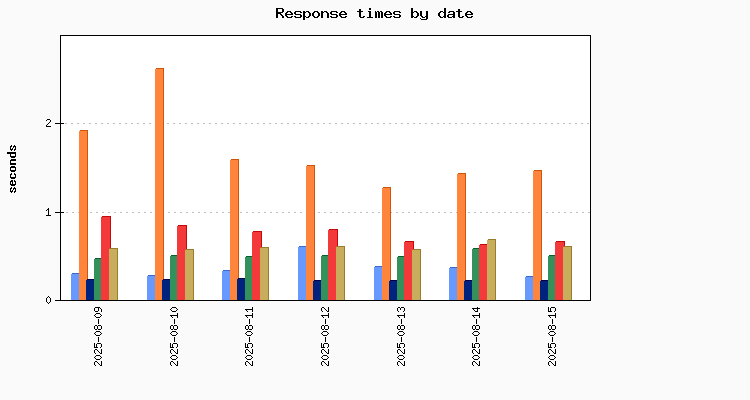
Average Response Times for August 15, 2025
Average Response Times August 05, 2025 - August 15, 2025
Hourly Average Response Times
Select individual website to display:
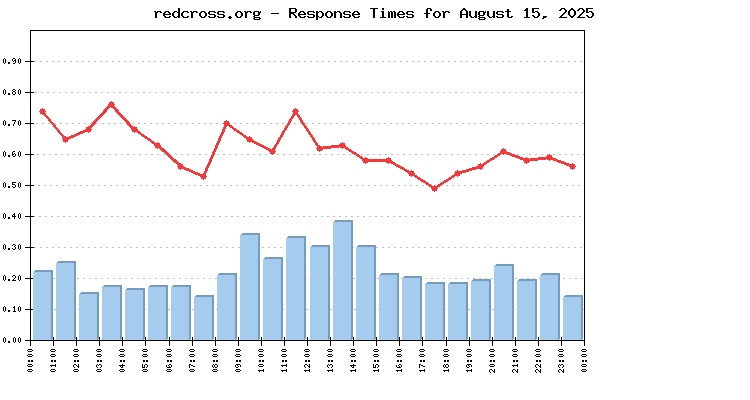
Average response times by hour for August 15, 2025
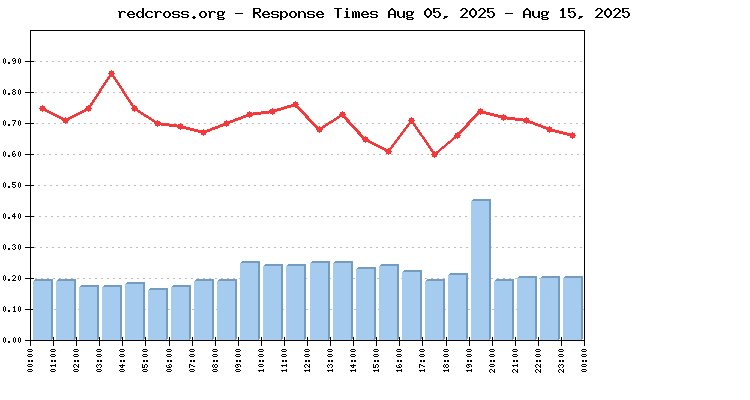
Average response times by hour August 05, 2025 - August 15, 2025
Uptime
Uptime August 15, 2025
Uptime August 05, 2025 - August 15, 2025
Methodology:
WebSitePulse Performance Reports measure Uptime and Response Time as the most important metrics for the availability and the reliability of any web-based operation. Performance measurement takes place daily, every 15 minutes during the entire Hurricane season. The WebSitePulse website monitoring service is used to collect data and to create the reports.
The simultaneous monitoring is performed from 3 US locations of the WebSitePulse monitoring network: Trumbull, CT, San Francisco, CA and Chicago, IL. In case of a detected malfunction or unavailability, the system performs automated error verification from 3 independent resources and only after the above procedure is performed and has returned consistent results, the detected error is confirmed, recorded, and included in the daily performance reports. In these cases, an advanced WebSitePulse exclusive feature comes into play - Forced Monitoring - which automatically switches to a 3 minute - monitoring interval for increased accuracy.
About WebSitePulse:
WebSitePulse is a leading provider of global, independent, and objective availability and performance monitoring of web sites, servers, network components, web applications, e-business- and email round-trip transactions.
Contact:
For more information about this report please contact:
George T., CTO
phone: 1-407-380-1600
email:
Reproduction:
WebSitePulse launched the Performance and Uptime Reports program to keep the general public and the Internet community informed about the performance of specific websites and the challenges their webmasters, owners and operators are facing on a daily basis, especially when the web traffic intensifies due to some special events through the year. Some of the most popular web destinations, related to each particular event, are selected for the purpose of the Reports, and data from their performance measurements is made available on the WebSitePulse public website.
With the intention to broadly disseminate this information for the benefit of the Internet community, we encourage the use of this information without prior approval and under the following Terms and Conditions:
The Data from the performance measurements cannot be changed or manipulated and should be used "as is".
WebSitePulse 2025 Hurricane Season Web Performance and Uptime Report Intro
The 2025 Atlantic Hurricane Season runs from June 1st to November 30th, the period when more than
97% of tropical and subtropical storms typically form in the Atlantic. This season covers storm
activity in the Northern Hemisphere, specifically in the Atlantic Ocean, Gulf of Mexico, and
Caribbean Sea, often affecting North America.
The Atlantic Hurricane Season started on June 24th, 2025, with Tropical Storm Andrea, followed by three more Tropical Storms — Barry (June 28th ), Chantal (July 4th ), and Dexter (August 4th), leading to more than $61.97 million in damage and 14 deaths.
The 2025 Pacific Hurricane Season began on May 15th in the Eastern Pacific and on June 1st in the Central Pacific, with both ending on November 30th. Unlike last season, which marked the latest start to a Pacific hurricane season in the satellite era, this year saw several storms form early in the season.
The season began with Tropical Storm Alvin on May 28th. Since then, there have been one tropical depression (Eight-E), three tropical storms (Cosme, Dalila, and Keil), two Category 1 hurricanes (Barbara and Gil), two Category 3 hurricanes (Flossie and Iona), and one Category 4 hurricane (Erick).
Altogether, these storms have caused over $290 million in damage and resulted in 25 fatalities. For the 20th year in a row, WebSitePulse will offer free monitoring and alerts throughout the remainder of the 2025 hurricane season for five leading websites that deliver real-time forecasts, emergency updates, and donation options during hurricanes, floods, and other natural or human- made disasters.
The WebSitePulse Performance Reports will measure the websites' uptime and response time as the most critical metrics for any web-based operations' availability and reliability — crucial for the End Users' overall online experience. Web transactions will be measured every 15 minutes simultaneously from three different monitoring locations. In-depth analytical information is also collected and stored in the WebSitePulse system for future reference. The Reports reflect the most common performance criteria: response time and availability - but in-debt analytical information is also collected and stored in the WebSitePulse system for future references.
The Atlantic Hurricane Season started on June 24th, 2025, with Tropical Storm Andrea, followed by three more Tropical Storms — Barry (June 28th ), Chantal (July 4th ), and Dexter (August 4th), leading to more than $61.97 million in damage and 14 deaths.
The 2025 Pacific Hurricane Season began on May 15th in the Eastern Pacific and on June 1st in the Central Pacific, with both ending on November 30th. Unlike last season, which marked the latest start to a Pacific hurricane season in the satellite era, this year saw several storms form early in the season.
The season began with Tropical Storm Alvin on May 28th. Since then, there have been one tropical depression (Eight-E), three tropical storms (Cosme, Dalila, and Keil), two Category 1 hurricanes (Barbara and Gil), two Category 3 hurricanes (Flossie and Iona), and one Category 4 hurricane (Erick).
Altogether, these storms have caused over $290 million in damage and resulted in 25 fatalities. For the 20th year in a row, WebSitePulse will offer free monitoring and alerts throughout the remainder of the 2025 hurricane season for five leading websites that deliver real-time forecasts, emergency updates, and donation options during hurricanes, floods, and other natural or human- made disasters.
The WebSitePulse Performance Reports will measure the websites' uptime and response time as the most critical metrics for any web-based operations' availability and reliability — crucial for the End Users' overall online experience. Web transactions will be measured every 15 minutes simultaneously from three different monitoring locations. In-depth analytical information is also collected and stored in the WebSitePulse system for future reference. The Reports reflect the most common performance criteria: response time and availability - but in-debt analytical information is also collected and stored in the WebSitePulse system for future references.
| Daily Report for August 15, 2025 | See report for: |
WebSitePulse reports the following results from web performance measurement of the Hurricane- and disaster-related websites:
The daily Average Response time from all monitored websites was 0.616 sec.
| The Average Response time as measured from the US East Coast (Trumbull, CT) was: | 0.638 sec. |
| The Average Response time as measured from the US West Coast (San Francisco, CA) was: | 0.736 sec. |
| The Average Response time as measured from the US Central was (Chicago, IL): | 0.474 sec. |
| The Best Response time measured from US East Coast (Trumbull, CT): | 0.240 sec. |
| The Best Response time measured from US West Coast (San Francisco, CA): | 0.130 sec. |
| The Best Response time measured from US Central was (Chicago, IL): | 0.196 sec. |
The typical shopping transaction took the least time for redcross.org visitors - 0.220 sec., while the visitors of weather.com had to be the most patient, as the shopping transaction there took in average of 1.459 sec.
Two of the monitored websites delivered above-the-average response times for their transactions, while four of them demonstrated below-the-average daily performance.
The daily Average Uptime for the entire Group was 100%.
All websites were available with no interruptions.
Report Highlights
No events of particular importance or possible negative impact on the online visitors' interaction with the Websites included into the 2025 Hurricane Season report were detected during the reported period, and according to WebSitePulse, the Group delivered the expected levels of End-User experience and Customer satisfaction.
Please, scroll down for Detailed Reports and Charts provided by WebSitePulse:
Daily Response Times
| Legend: | ||||
| nhc.noaa.gov | weather | redcross.org | floridadisaster.org | nesdis.noaa.gov |
| tropicalstormrisk | ||||
Average Response Times for August 15, 2025
| # | Target | Trumbull | San Francisco | Chicago | Avg. resp. time |
|---|---|---|---|---|---|
| 1 | redcross.org | 0.331 | 0.130 | 0.199 | 0.220 |
| 2 | nhc.noaa.gov | 0.240 | 0.359 | 0.196 | 0.265 |
| 3 | floridadisaster.org | 0.513 | 0.545 | 0.431 | 0.496 |
| 4 | tropicalstormrisk.com | 0.468 | 0.848 | 0.489 | 0.602 |
| 5 | nesdis.noaa.gov | 0.671 | 0.977 | 0.314 | 0.654 |
| 6 | weather.com | 1.604 | 1.558 | 1.214 | 1.459 |
Average Response Times August 05, 2025 - August 15, 2025
| # | Target | Trumbull | San Francisco | Chicago | Avg. resp. time |
|---|---|---|---|---|---|
| 1 | redcross.org | 0.326 | 0.147 | 0.173 | 0.215 |
| 2 | nhc.noaa.gov | 0.247 | 0.538 | 0.209 | 0.331 |
| 3 | floridadisaster.org | 0.523 | 0.543 | 0.589 | 0.552 |
| 4 | tropicalstormrisk.com | 0.453 | 0.827 | 0.489 | 0.590 |
| 5 | nesdis.noaa.gov | 0.901 | 1.025 | 0.484 | 0.803 |
| 6 | weather.com | 1.843 | 1.794 | 1.621 | 1.753 |
Hourly Average Response Times
Select individual website to display:
| Legend: | |
| individual site response times | monitored group average response times |
Average response times by hour for August 15, 2025
| Target | Hours | |||||||||||||||||||||||
| 00 | 01 | 02 | 03 | 04 | 05 | 06 | 07 | 08 | 09 | 10 | 11 | 12 | 13 | 14 | 15 | 16 | 17 | 18 | 19 | 20 | 21 | 22 | 23 | |
| floridadisaster.org | 0.82 | 0.50 | 0.53 | 0.44 | 0.47 | 0.42 | 0.47 | 0.48 | 0.42 | 0.52 | 0.50 | 0.52 | 0.51 | 0.57 | 0.44 | 0.48 | 0.44 | 0.48 | 0.49 | 0.51 | 0.49 | 0.48 | 0.48 | 0.47 |
| nesdis.noaa.gov | 0.86 | 1.00 | 0.76 | 0.95 | 0.80 | 0.77 | 0.72 | 0.52 | 0.53 | 0.73 | 0.55 | 0.71 | 0.80 | 0.40 | 0.42 | 0.49 | 0.60 | 0.33 | 0.52 | 0.53 | 0.63 | 0.63 | 0.71 | 0.76 |
| nhc.noaa.gov | 0.22 | 0.29 | 0.31 | 0.26 | 0.28 | 0.26 | 0.24 | 0.22 | 0.24 | 0.32 | 0.24 | 0.26 | 0.29 | 0.22 | 0.24 | 0.30 | 0.24 | 0.25 | 0.28 | 0.28 | 0.31 | 0.35 | 0.22 | 0.23 |
| redcross.org | 0.22 | 0.25 | 0.15 | 0.17 | 0.16 | 0.17 | 0.17 | 0.14 | 0.21 | 0.34 | 0.26 | 0.33 | 0.30 | 0.38 | 0.30 | 0.21 | 0.20 | 0.18 | 0.18 | 0.19 | 0.24 | 0.19 | 0.21 | 0.14 |
| tropicalstormrisk | 0.59 | 0.59 | 0.59 | 0.59 | 0.59 | 0.70 | 0.58 | 0.58 | 0.58 | 0.62 | 0.68 | 0.62 | 0.60 | 0.59 | 0.60 | 0.59 | 0.71 | 0.59 | 0.59 | 0.60 | 0.59 | 0.56 | 0.57 | 0.56 |
| weather | 1.72 | 1.26 | 1.73 | 2.13 | 1.78 | 1.47 | 1.20 | 1.22 | 2.23 | 1.36 | 1.43 | 1.99 | 1.23 | 1.65 | 1.47 | 1.40 | 1.03 | 1.10 | 1.19 | 1.26 | 1.40 | 1.25 | 1.34 | 1.17 |
Average response times by hour August 05, 2025 - August 15, 2025
| Target | Hours | |||||||||||||||||||||||
| 00 | 01 | 02 | 03 | 04 | 05 | 06 | 07 | 08 | 09 | 10 | 11 | 12 | 13 | 14 | 15 | 16 | 17 | 18 | 19 | 20 | 21 | 22 | 23 | |
| floridadisaster.org | 0.53 | 0.49 | 0.82 | 1.49 | 0.47 | 0.48 | 0.45 | 0.45 | 0.46 | 0.47 | 0.51 | 0.55 | 0.49 | 0.50 | 0.51 | 0.49 | 0.60 | 0.50 | 0.48 | 0.48 | 0.54 | 0.49 | 0.49 | 0.50 |
| nesdis.noaa.gov | 0.93 | 0.97 | 1.00 | 1.01 | 1.02 | 0.96 | 0.87 | 0.74 | 0.70 | 0.77 | 0.72 | 0.78 | 0.79 | 0.79 | 0.69 | 0.61 | 0.66 | 0.68 | 0.64 | 0.78 | 0.74 | 0.75 | 0.77 | 0.89 |
| nhc.noaa.gov | 0.29 | 0.33 | 0.28 | 0.29 | 0.33 | 0.27 | 0.30 | 0.34 | 0.34 | 0.33 | 0.36 | 0.32 | 0.34 | 0.35 | 0.33 | 0.37 | 0.39 | 0.32 | 0.37 | 0.36 | 0.38 | 0.35 | 0.32 | 0.29 |
| redcross.org | 0.19 | 0.19 | 0.17 | 0.17 | 0.18 | 0.16 | 0.17 | 0.19 | 0.19 | 0.25 | 0.24 | 0.24 | 0.25 | 0.25 | 0.23 | 0.24 | 0.22 | 0.19 | 0.21 | 0.45 | 0.19 | 0.20 | 0.20 | 0.20 |
| tropicalstormrisk | 0.57 | 0.59 | 0.58 | 0.57 | 0.60 | 0.58 | 0.59 | 0.59 | 0.59 | 0.57 | 0.60 | 0.60 | 0.58 | 0.59 | 0.57 | 0.57 | 0.80 | 0.57 | 0.59 | 0.57 | 0.58 | 0.57 | 0.58 | 0.57 |
| weather | 1.99 | 1.70 | 1.66 | 1.66 | 1.87 | 1.72 | 1.78 | 1.73 | 1.93 | 1.96 | 1.98 | 2.10 | 1.64 | 1.92 | 1.57 | 1.38 | 1.61 | 1.37 | 1.64 | 1.83 | 1.88 | 1.90 | 1.70 | 1.54 |
Uptime
Uptime August 15, 2025
| # | Target | Trumbull | San Francisco | Chicago | Avg. uptime |
|---|---|---|---|---|---|
| 1 | nhc.noaa.gov | 100.000% | 100.000% | 100.000% | 100.000% |
| 2 | weather.com | 100.000% | 100.000% | 100.000% | 100.000% |
| 3 | redcross.org | 100.000% | 100.000% | 100.000% | 100.000% |
| 4 | floridadisaster.org | 100.000% | 100.000% | 100.000% | 100.000% |
| 5 | nesdis.noaa.gov | 100.000% | 100.000% | 100.000% | 100.000% |
| 6 | tropicalstormrisk.com | 100.000% | 100.000% | 100.000% | 100.000% |
Uptime August 05, 2025 - August 15, 2025
| # | Target | Trumbull | San Francisco | Chicago | Avg. uptime |
|---|---|---|---|---|---|
| 1 | tropicalstormrisk.com | 100.000% | 100.000% | 100.000% | 100.000% |
| 2 | nhc.noaa.gov | 100.000% | 100.000% | 100.000% | 100.000% |
| 3 | redcross.org | 100.000% | 100.000% | 100.000% | 100.000% |
| 4 | nesdis.noaa.gov | 100.000% | 100.000% | 100.000% | 100.000% |
| 5 | weather.com | 100.000% | 100.000% | 100.000% | 100.000% |
| 6 | floridadisaster.org | 99.919% | 99.940% | 99.935% | 99.932% |
Methodology:
WebSitePulse Performance Reports measure Uptime and Response Time as the most important metrics for the availability and the reliability of any web-based operation. Performance measurement takes place daily, every 15 minutes during the entire Hurricane season. The WebSitePulse website monitoring service is used to collect data and to create the reports.
The simultaneous monitoring is performed from 3 US locations of the WebSitePulse monitoring network: Trumbull, CT, San Francisco, CA and Chicago, IL. In case of a detected malfunction or unavailability, the system performs automated error verification from 3 independent resources and only after the above procedure is performed and has returned consistent results, the detected error is confirmed, recorded, and included in the daily performance reports. In these cases, an advanced WebSitePulse exclusive feature comes into play - Forced Monitoring - which automatically switches to a 3 minute - monitoring interval for increased accuracy.
About WebSitePulse:
WebSitePulse is a leading provider of global, independent, and objective availability and performance monitoring of web sites, servers, network components, web applications, e-business- and email round-trip transactions.
Contact:
For more information about this report please contact:
George T., CTO
phone: 1-407-380-1600
email:
Reproduction:
WebSitePulse launched the Performance and Uptime Reports program to keep the general public and the Internet community informed about the performance of specific websites and the challenges their webmasters, owners and operators are facing on a daily basis, especially when the web traffic intensifies due to some special events through the year. Some of the most popular web destinations, related to each particular event, are selected for the purpose of the Reports, and data from their performance measurements is made available on the WebSitePulse public website.
With the intention to broadly disseminate this information for the benefit of the Internet community, we encourage the use of this information without prior approval and under the following Terms and Conditions:
- WebSitePulse should be referred as the "Source" of the information;
- WebSitePulse should be acknowledged as the owner of the copyrights of the information in the Reports;
- The texts of the Reports could be changed or altered to better suit the needs and the style of the publisher without prior notice to WebSitePulse. However, the integrity and the meaning of the information should be preserved;
The Data from the performance measurements cannot be changed or manipulated and should be used "as is".
